By Louis Lopez, founder of Smooth Vegas Ceilings — 15+ years in construction and customer service. Updated October 2026.
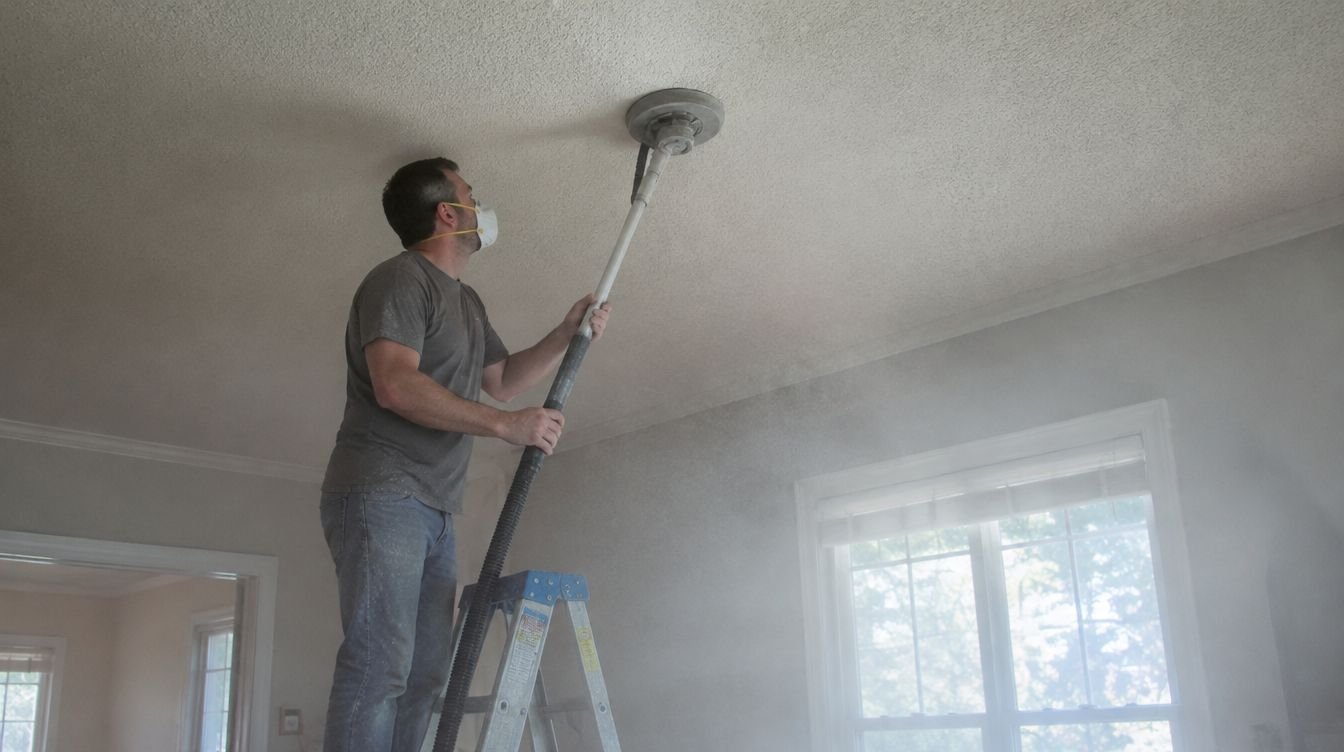
Search for an easier way to get rid of popcorn ceilings and you’ll quickly find power sanders: drywall sanders with vacuum hoses, orbital sanders, even professional tools like the Festool Planex. They look faster than scraping. But of all the ways to remove a popcorn ceiling, sanding is the one that puts the most fine dust in the air — and that’s exactly the wrong thing to do with a ceiling that might contain asbestos.
Never sand an untested popcorn ceiling. Homes built before the mid-1980s may have asbestos in the texture. Sanding turns it into fine dust that spreads through your home and your A/C. Get it tested first.
The Short Answer
Don’t sand popcorn texture off a ceiling. Wet scraping removes it with far less dust. Sanding has a small role later in the job — lightly smoothing joint compound after the popcorn is gone, on a ceiling that has tested clear.
Why Sanding Is the Riskiest Method
- It makes the finest dust. Scraping wet texture drops heavy, damp clumps. Sanding grinds it into powder that floats.
- Dust travels. Fine particles get into carpets, closets, A/C returns and ductwork — and keep circulating long after the job.
- Asbestos turns into airborne fibers. If the texture contains asbestos, sanding is one of the worst ways to disturb it.
- It’s hard on the drywall. Power sanders can burn through drywall paper and leave swirl marks you’ll have to skim coat.
- Clogged pads and hoses. Popcorn texture gums up sanding discs fast, so it’s often slower than it looks.
What About “Dust-Free” Sanders With a Vacuum?
Sanders with a vacuum attachment — including popular drywall sanders sold at Home Depot and Lowe’s and pro tools like the Festool Planex — capture much of the dust at the pad. That’s a big improvement for sanding joint compound. But “dust-free” isn’t “fiber-free.” Some dust escapes at the edges, and a regular shop vac without a true HEPA filter can blow fine particles out its exhaust. None of these tools replace the containment and HEPA systems a licensed asbestos abatement company uses.
Sanding vs. Scraping vs. Covering
| Method | Dust | Asbestos-safe? | Best use |
|---|---|---|---|
| Power sanding | Highest | No | Light smoothing of joint compound after removal, tested-clear ceilings only |
| Wet scraping | Low to moderate | Only on tested-clear ceilings | Most popcorn removal jobs |
| Covering with drywall or panels | Very low | Can be an option with care — screws still penetrate the old ceiling | When removal would be messy or the texture is painted |
| Licensed abatement | Controlled | Yes | Any ceiling that tested positive |
When Sanding Does Make Sense
After popcorn texture is scraped off a tested-clear ceiling, the drywall usually needs patching, a skim coat and light sanding before primer and paint. A pole sander or a vacuum-connected drywall sander is the right tool for that step. Use a NIOSH-approved respirator, seal the room and keep the A/C off while you work.
Already Sanded Your Ceiling? Do This Now
- Stop sanding and leave the room.
- Turn off the A/C and fans serving that area, and close the door.
- Don’t sweep, dust or use a regular vacuum — it spreads fine particles.
- Get the material tested as soon as possible.
- If asbestos is found, have a licensed company handle cleanup. Use our asbestos exposure check for clear next steps.
Popcorn Ceiling Sander Questions
Can you sand a popcorn ceiling?
You can, but it’s the riskiest method because it creates fine airborne dust. Wet scraping is safer and usually faster. Never sand an untested ceiling.
Is a drywall sander with a vacuum safe for popcorn ceilings?
It reduces dust but doesn’t eliminate it, and it is not safe for asbestos. Use it only for light sanding of joint compound on a tested-clear ceiling.
Is there a dust-free way to remove a popcorn ceiling?
No method is completely dust-free. Wet scraping with sealed rooms keeps dust low. Covering the ceiling with new drywall creates the least dust.
What should I do if I sanded a popcorn ceiling before testing?
Stop, close off the room, turn off the A/C and get the material tested. Don’t sweep or vacuum. If asbestos is found, hire a licensed company for cleanup.
Want it done without the dust?
Licensed Las Vegas pros seal the room, test first and leave a smooth finish. Get a free estimate.
Leave a Reply