By Louis Lopez, founder of Smooth Vegas Ceilings — 15+ years in construction and customer service. Updated October 2026.
Walk down the paint aisle at Home Depot or Lowe’s and you’ll find a whole shelf of popcorn ceiling removal tools: scrapers with bags, shop-vac attachments, pump sprayers and “dust-free” sanders. Most of them work fine on the right ceiling. The problem is that none of them can tell you whether your ceiling is safe to scrape in the first place.
TEST FIRST. If your home was built before the mid-1980s, your popcorn ceiling could contain asbestos. No tool on the shelf makes scraping an asbestos ceiling safe. Get a lab test before you buy anything — here’s how testing works.
The Short Answer
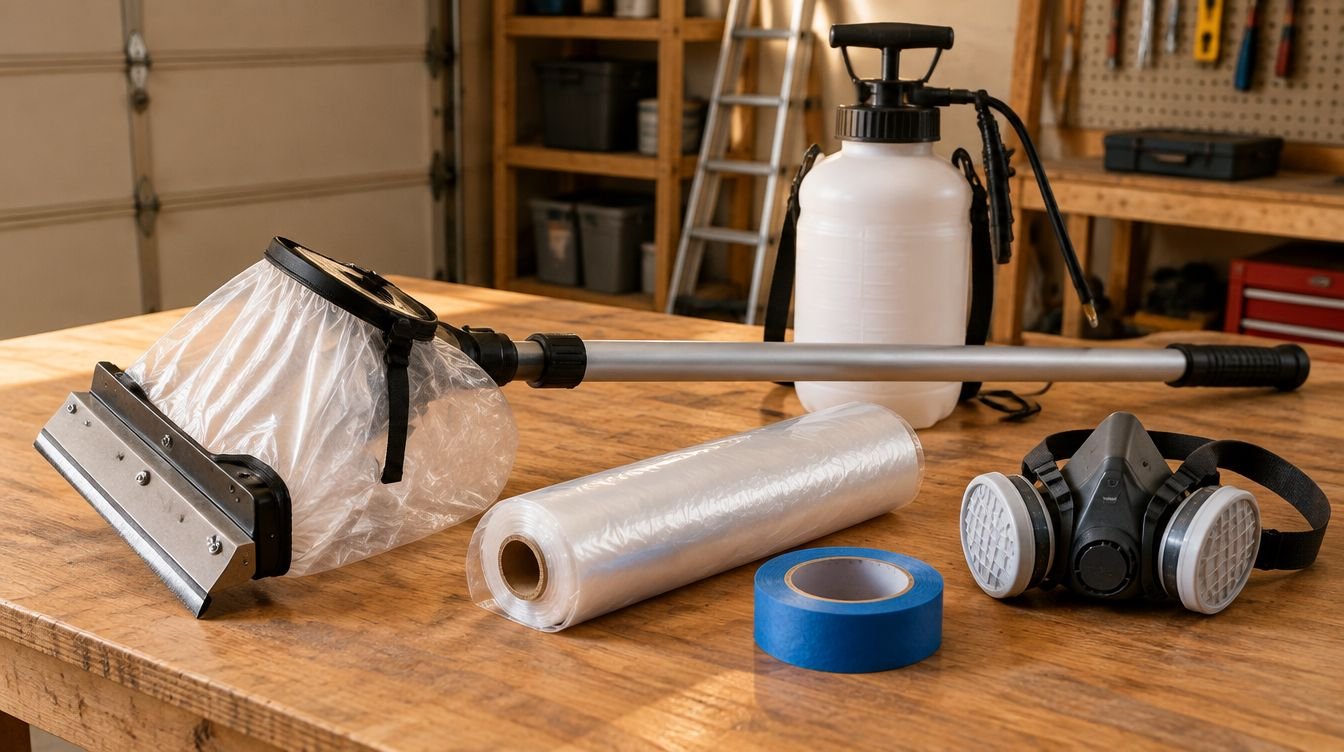
For a tested, unpainted popcorn ceiling, the tools that matter are simple: a pump sprayer to soak the texture, a wide scraper (ideally one with a debris bag), an extension pole or sturdy ladder, and plenty of plastic sheeting and painter’s tape. Fancy machines save less time than the boxes promise, and power sanders create the most dust of any method.
Popcorn Ceiling Removal Tools Compared
| Tool | How it works | Best for | Watch out for |
|---|---|---|---|
| Wide drywall knife (6–12″) | Scrape wet texture off by hand | Small rooms, patches, tight corners | Easy to gouge drywall; messy |
| Popcorn scraper with debris bag (Homax-style) | A wide blade on a pole catches falling texture in a bag | Most DIY rooms | Bag fills fast; still need plastic on the floor |
| Shop-vac scraper attachment / “popcorn ceiling vacuum” | A blade connects to a vacuum hose and sucks up debris | Less cleanup on dry, loose texture | A regular shop vac can blow fine dust out its exhaust |
| Pump sprayer (HDX, Chapin and others) | Sprays water to soften texture before scraping | Every job — this is the key tool | Too much water can damage drywall |
| Power drywall sander with vacuum (e.g., Festool Planex) | Grinds texture off with an abrasive pad | Pros finishing tested-clear ceilings | Creates fine dust — the riskiest method |
| Extension pole | Lets you work from the floor | Standard 8-foot ceilings | Less control than a ladder on tough spots |
What You’ll Actually Need (Shopping List)
- Pump sprayer and water (a drop of dish soap helps it soak in)
- Wide scraper or popcorn scraper with a bag
- Extension pole and a stable step ladder
- Heavy plastic sheeting for floors and walls, plus painter’s tape
- A NIOSH-approved respirator, safety glasses and a hat
- Contractor trash bags
- Joint compound, a taping knife and sandpaper for repairs afterward
- Primer and flat ceiling paint
You’ll find these at Home Depot, Lowe’s, Ace Hardware, Walmart and online. Brands and prices change often, so compare current listings — the store brand usually works as well as the name brand for this job.
What These Tools Can’t Do
- Tell you if there’s asbestos. Only a lab test can.
- Make an asbestos ceiling safe to scrape. A dust mask or a “dust-free” attachment isn’t a containment system.
- Fix painted popcorn. Paint seals the texture so water can’t soak in. See painted popcorn ceiling removal.
- Finish the ceiling. After scraping, you still have seams, dings and bare drywall to repair, prime and paint.
Step by Step: Using a Popcorn Scraper the Right Way
- Test first if your home was built before the mid-1980s.
- Clear and seal the room. Furniture out, plastic on the floor and walls, tape over vents, and turn off the A/C or fans for that room.
- Turn off power to ceiling lights and fans and remove fixtures.
- Spray a 4×4-foot section with water and wait 10–15 minutes.
- Scrape at a low angle with light pressure. If it fights you, spray again — don’t dig.
- Bag debris as you go and keep it damp.
- Repair, prime and paint once the ceiling is fully dry.
DIY Tools vs. Hiring a Pro: The Real Math
A DIY kit — sprayer, scraper, plastic, respirator, repair supplies and paint — adds up quickly, plus a weekend or two of your time. In Las Vegas, current cost data puts basic professional removal on a single room around $300–$600 (see our Las Vegas cost guide). For one small room on a tested-clear ceiling, DIY can make sense. For a whole house, high ceilings, painted texture or any chance of asbestos, a pro is usually the better deal.
When to Put the Tool Down and Call a Pro
- Your home was built before the mid-1980s and you haven’t tested
- The popcorn is painted
- Ceilings are vaulted or two-story
- There’s water damage or sagging
- You already scraped some and now you’re worried — use our exposure check
Popcorn Ceiling Removal Tool Questions
What is the best popcorn ceiling removal tool?
For most tested, unpainted ceilings, a pump sprayer plus a wide scraper with a debris bag is the best mix of speed and cleanup. Skip power sanding.
Do popcorn ceiling vacuum attachments work?
They reduce cleanup on loose texture, but a regular shop vac can blow fine dust out the exhaust. They are not safe for asbestos.
Can I buy a popcorn ceiling removal tool at Home Depot or Lowe’s?
Yes. Both carry scrapers with bags, pump sprayers, plastic sheeting and respirators. Test your ceiling before you start.
Is there a tool that makes asbestos popcorn removal safe?
No. Asbestos ceilings should be removed by a licensed abatement company with sealed containment, HEPA filtration and proper disposal.
How long does it take to scrape a popcorn ceiling?
A single room usually takes a few hours to scrape once prepped, plus drying and repair time. Painted ceilings take much longer.
Rather skip the scraping?
Get a free estimate from a licensed Las Vegas pro — we’ll check for asbestos first.
Leave a Reply