Category: Selling Your Home

  • Buyer’s Inspector Flagged Possible Asbestos in the Popcorn Ceiling — Seller Options

    Buyer’s Inspector Flagged Possible Asbestos in the Popcorn Ceiling — Seller Options

    Short answer: don’t panic. A buyer’s inspector noting “possible asbestos” in a popcorn ceiling is common in older homes — it’s a flag, not a diagnosis. Your next steps are to confirm it with a lab test, get a written quote, and then work with your agent on one of four options: fix it, credit it, reduce the price, or sell as-is.

    Here’s how to handle it calmly and keep your sale moving.

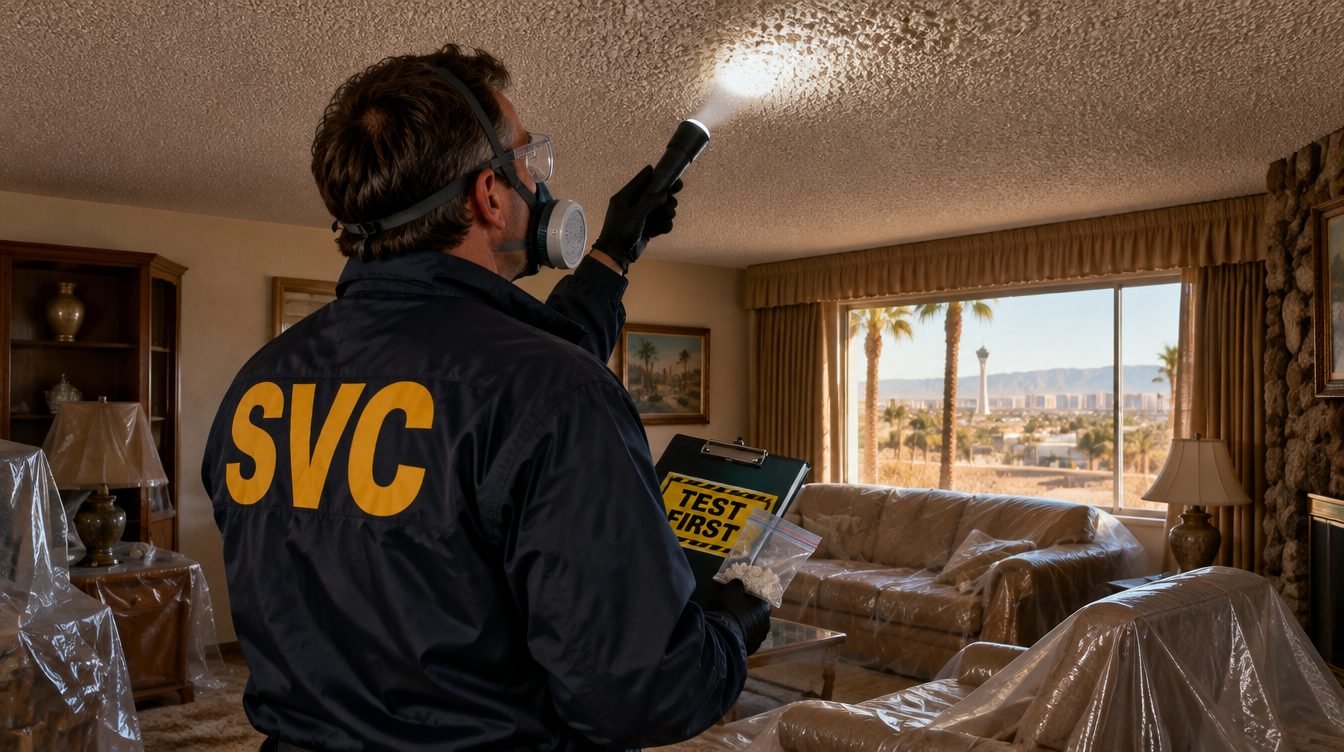
    TEST FIRST. Popcorn ceilings in homes built before the mid-1980s may contain asbestos. Don’t scrape, sand or drill before a lab test. This article is general information — not legal or real estate advice. Ask your agent and, for legal questions, a Nevada real estate attorney.

    Why Inspectors Flag Popcorn Ceilings

    Home inspectors look at what they can see. When they see spray-on ceiling texture in a home built before the mid-1980s, many will note it as possible asbestos-containing material and recommend testing. Standard inspections usually don’t include lab testing, so the inspector can’t tell you whether it actually contains asbestos.

    That flag often lands in the buyer’s repair request — sometimes with a scary estimate attached. Your job is to replace guesses with facts.

    Step 1: Confirm With a Lab Test

    • A trained technician takes small samples and sends them to an accredited lab.
    • A professional test typically costs about $250–$850 (2026 national average).
    • Ask about rush results if your inspection deadline is close.

    If the result is clear, share the report — the issue may simply go away. If asbestos is found, you now have a known condition to handle and disclose. See what Nevada sellers disclose.

    Step 2: Get a Written Quote

    Buyers often estimate high. A written quote from a licensed company gives both sides a real number. Ask for the quote to list:

    • Abatement or removal cost
    • Containment and disposal
    • Clearance air testing
    • New finish, primer and paint
    • Schedule — how long it takes from start to clearance

    Step 3: Choose Your Option

    OptionProsCons
    Fix it before closingYou control the contractor and the result; buyer gets a finished homeMust fit the escrow timeline; you manage the work
    Credit at closingNo work during escrow; simpleBuyer may ask for more than the real cost
    Price reductionClean and simpleAffects the final sale price, which can matter for appraisal
    Sell as-isNo added costBuyer may cancel during their contingency period

    Your agent will help you weigh these against your contract deadlines. For contract questions, talk to your agent or a Nevada real estate attorney.

    If You Choose to Fix It

    1. Hire a properly licensed asbestos abatement company — not a general handyman.
    2. Get the schedule in writing and confirm it fits your closing date.
    3. Expect containment: sealed rooms and protective gear.
    4. Get clearance testing after the work.
    5. Keep every document — license number, invoice, clearance results — and share them with the buyer.
    6. Finish and paint so the room looks complete for the final walkthrough.

    If You Choose a Credit

    Use your written quote as the starting point. Some buyers will push for a bigger number to cover “unknowns.” A detailed quote from a licensed company — including testing, clearance and finish work — makes it easier to hold a fair line.

    What Buyers Are Really Worried About

    When a buyer sees “possible asbestos” in an inspection report, they’re usually worried about three things: safety (is my family at risk?), cost (how much will this really be?), and hassle (will this delay my move?). Answer all three and most buyers relax:

    • Safety: an intact, undisturbed ceiling is generally lower risk, and a licensed company handles any removal.
    • Cost: a written quote replaces their worst-case guess.
    • Hassle: a clear plan — work before closing, or a fair credit — keeps their timeline intact.

    Sample Messages Through Your Agent

    Your agent will handle the actual negotiation, but it helps to know what a calm, factual response sounds like. Examples you can discuss with your agent:

    • “The seller has ordered a lab test of the ceiling texture and will share the results as soon as they’re in.”
    • “The test was clear. A copy of the lab report is attached.”
    • “The test confirmed asbestos in the living room ceiling. Attached is a written quote from a licensed abatement company. The seller is offering a credit for the quoted amount.”
    • “The seller will have a licensed abatement company complete the work before closing and will provide the invoice and clearance results.”

    How Long Each Step Usually Takes

    • Lab test: sampling is quick; results often take several business days, faster with rush service.
    • Quote: usually a site visit, then a written estimate.
    • Abatement: depends on size; includes setup, removal and clearance testing.
    • Finish and paint: after clearance, plus drying time.

    Share your contract deadlines with every contractor up front so they can tell you honestly whether the work fits.

    What NOT to Do

    • Don’t scrape, sand or patch the ceiling yourself before closing.
    • Don’t hire an unlicensed crew to “just knock it down.”
    • Don’t argue about whether it’s asbestos without a lab test.
    • Don’t miss contract deadlines while you decide — ask your agent for the dates.

    Questions to Ask the Abatement Company

    • Are you properly licensed for asbestos work in Nevada? What’s your license number?
    • Can you start and finish before my closing date — including clearance testing?
    • What’s included: containment, disposal, clearance, repairs, finish and paint?
    • Will you provide an invoice and clearance results I can give the buyer?
    • Do you carry liability insurance, and can I get a certificate?

    SVC checks licenses and insurance before connecting you with any pro. See how we vet our partners.

    Keep the Deal Moving

    Most deals survive an asbestos flag when the seller responds quickly with facts. A clear lab result, a written quote and a reasonable offer — repair, credit or price — usually keep buyers comfortable. Fast, documented answers are your best negotiating tool.

    After Closing: Keep Your Records

    Once the sale closes, keep copies of the lab report, quotes, invoices, clearance results and every message about the ceiling. If a question ever comes up later, those documents show exactly what you knew, what you disclosed and what was done. Store them with your closing paperwork.

    Next Time: Test Before You List

    If you’re selling another older home, or you’re still preparing to list, testing before you go to market lets you set the terms instead of reacting to a buyer’s inspection. See the pre-listing checklist.

    Inspection Flags by Build Year

    Find your home’s year on the Clark County Assessor website (Nye County for Pahrump), then use this quick guide. Check your year →

    Home builtWhat it means for you
    Before 1980Expect a flag. Order a rush lab test right away.
    1980–1986Also commonly flagged. A quick test often settles it.
    1987–1999Less likely to be confirmed. A test usually clears it fast.
    2000 or newerRarely flagged. If it is, a test should settle it quickly.

    TEST FIRST · 60-SECOND CHECK

    Could your ceiling have asbestos?

    Answer 6 quick questions about your home and get clear next steps — including what to do if it’s already been scraped. Private: your answers never leave your device.

    Inspection & Escrow Questions

    The buyer’s inspector says my ceiling may contain asbestos. Does it?

    Not necessarily. Inspectors usually flag “possible asbestos-containing material” based on the home’s age and the look of the texture. Only an accredited lab test can confirm it.

    Do I have to fix asbestos found during the buyer’s inspection?

    Usually not automatically — it depends on your purchase contract and what you negotiate. Common options are fixing it, offering a credit, lowering the price, or selling as-is. Your agent will guide you through the contract terms.

    Is a credit better than doing the work before closing?

    A credit avoids scheduling work during a tight escrow, and the buyer can choose their own contractor. Doing the work yourself gives you control over the result. A written quote helps either way.

    Can I just scrape the ceiling quickly before closing?

    No. If it contains asbestos, scraping can contaminate the home and create a bigger problem. Asbestos removal should be done by a properly licensed company, with clearance testing afterward.

    Will asbestos kill my sale?

    Usually not. Many homes with asbestos ceilings sell. A confirmed test result, a written quote and a clear plan often keep the deal on track.

    Sources

    In escrow and on a deadline?

    Tell us your closing date. We’ll set up testing fast and connect you with licensed pros who can give you a written quote.

    About SVC: Smooth Vegas Ceilings connects Las Vegas homeowners with licensed, insured contractors and properly licensed asbestos testing and abatement companies. SVC is not a real estate brokerage or law firm and does not give legal, real estate or medical advice. SVC does not perform asbestos abatement.
  • Remove, Seal or Cover a Popcorn Ceiling Before You Sell?

    Remove, Seal or Cover a Popcorn Ceiling Before You Sell?

    Short answer: if your ceiling tests clear, removing it usually gives the best result for a sale. If it contains asbestos, sealing or covering can cost less than licensed removal — but the asbestos stays in the home, so you’ll still disclose it. The right choice depends on your test result, budget and timeline.

    Here’s how the three options compare for sellers, side by side.

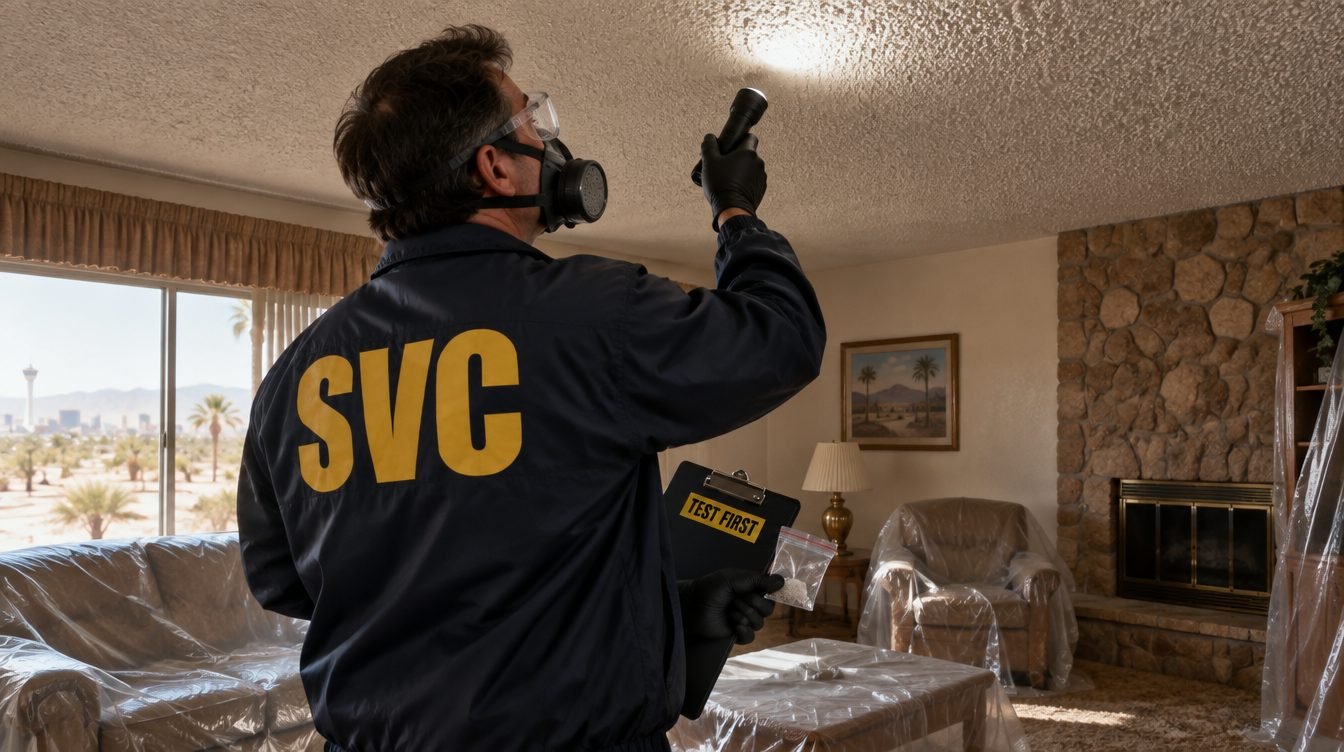
    TEST FIRST. Popcorn ceilings in homes built before the mid-1980s may contain asbestos. Don’t scrape, sand or drill before a lab test. This article is general information — not legal or real estate advice. Ask your agent and, for legal questions, a Nevada real estate attorney.

    The Three Options in Plain English

    • Remove: scrape off the texture, repair the drywall, apply a new finish, prime and paint. If asbestos is present, a licensed abatement company does the removal.
    • Seal (encapsulate): coat the existing texture with a sealant that locks it in place. The ceiling keeps its texture.
    • Cover: install new drywall, planks or panels over the old ceiling. The old texture stays hidden above.

    Side-by-Side Comparison for Sellers

    RemoveSealCover
    Typical cost$2–$6/sq ft complete job if clear; $4–$20/sq ft abatement if asbestosAbout $2–$6/sq ftAbout $2–$4/sq ft for new drywall, plus finish and paint
    LookSmooth or new texture — most updatedStill texturedNew flat ceiling
    Asbestos stays in home?No (if removed by licensed abatement)YesYes
    Disclose when selling?Discuss with your agent; share recordsYesYes
    Mess and disruptionHighestLowestMedium
    Best whenTest is clear, or you want the problem gone for goodAsbestos found, ceiling intact, tight budgetAsbestos found or ceiling damaged, want a modern look

    Costs are 2026 national averages (HomeGuide, Angi); Las Vegas quotes vary.

    If Your Test Is Clear

    With no asbestos, removal is a standard remodeling job and usually the best value for a sale. You get an updated look and a lab report to show buyers. Covering with drywall can make sense if the ceiling is badly damaged, but it’s usually more work than a straightforward removal.

    If Your Test Found Asbestos

    Now the math changes. Licensed abatement costs more because of containment, protective gear, disposal and clearance testing. That’s where sealing and covering earn a look:

    • Sealing is often the least expensive and least disruptive — good for an intact ceiling when you’re not trying to change the look.
    • Covering gives buyers the modern flat ceiling they want without disturbing the old texture — but installing drywall or planks means fastening through it, so use a qualified pro and follow their safety plan.
    • Removal costs the most but takes the asbestos out of the home for good — some sellers prefer a clean history with paperwork to match.

    What Buyers Think of Each Option

    • Removed with paperwork: usually the most reassuring — the issue is gone and documented.
    • Covered: looks great in photos; some buyers will ask what’s above the new ceiling, so have the test and work records ready.
    • Sealed: the texture is still visible, so buyers may still see it as dated, even with paperwork.

    Covering Options Explained

    • New drywall over the old ceiling: the most common cover option. It gives a true flat ceiling that can be finished smooth or textured to match the rest of the home.
    • Ceiling planks: wood-look or painted planks add character and can photograph well, but they’re a style choice — some buyers love them, some don’t.
    • Panels or tiles: usually the quickest cover, but they can look less finished in a home that’s otherwise updated.

    All of these attach through the old ceiling. In a home from the asbestos era, test first and use a qualified pro who follows a safety plan for any drilling.

    What About Just Painting Over It?

    Painting is the cheapest way to freshen a popcorn ceiling, and some sealants are applied much like paint. But there are trade-offs. Painting doesn’t change the dated texture buyers notice, the roller can knock loose bits of an untested ceiling, and painted popcorn is much harder to remove later — which can raise the cost for the next owner. If your home is from the asbestos era, test before you paint and ask a pro about the right product.

    Questions to Ask Every Contractor

    • Which option would you recommend for my test result and timeline — and why?
    • What’s included: prep, repairs, finish, primer, paint and cleanup?
    • How long will each room be out of use?
    • Will you provide paperwork I can give buyers?
    • Are you licensed and insured for this work? What’s your license number?

    Mistakes to Avoid

    • Covering or sealing an untested ceiling without knowing what’s in it.
    • DIY drilling or scraping into a ceiling from the asbestos era.
    • Assuming covered means “gone.” It’s still there — disclose it.
    • Choosing on price alone. The cheapest option can cost you at the negotiating table if buyers see it as unfinished.

    Water-Damaged Ceilings Are a Special Case

    If a leak has stained, sagged or soaked part of a popcorn ceiling, sealing it usually isn’t an option — damaged material needs to be repaired or removed. Fix the leak first, keep everyone out of the area, and don’t scrape or sweep the debris. If the damage came from a sudden event like a burst pipe, check whether your insurance may help: see does homeowners insurance cover asbestos removal?

    Water damage is also something buyers’ inspectors look for, so handle it — and document it — before you list.

    How to Decide in 5 Steps

    1. Test if your home was built before the mid-1980s.
    2. Get written quotes for each option that makes sense.
    3. Ask your agent which result buyers in your area respond to best.
    4. Check your timeline — sealing is fastest; abatement takes the longest.
    5. Choose and document — keep test results, invoices and any clearance reports for your disclosure folder.

    Partial Approaches

    You don’t have to treat every ceiling the same way. Some sellers remove popcorn in the main living areas and kitchen, and seal or leave it in secondary bedrooms. If you mix approaches, keep careful notes about which rooms were tested, removed, sealed or covered — you’ll need them for your disclosure and for buyers’ questions.

    Remove, Seal or Cover by Build Year

    Find your home’s year on the Clark County Assessor website (Nye County for Pahrump), then use this quick guide. Check your year →

    Home builtWhat it means for you
    Before 1980Test decides it. If asbestos is found, sealing or covering can cost less than abatement.
    1980–1986Same — test first, then compare all three options.
    1987–1999Removal is usually the best value — asbestos is less likely.
    2000 or newerRemoval or retexturing is a standard job.

    TEST FIRST · 60-SECOND CHECK

    Could your ceiling have asbestos?

    Answer 6 quick questions about your home and get clear next steps — including what to do if it’s already been scraped. Private: your answers never leave your device.

    Remove vs. Seal vs. Cover Questions

    Is it better to remove popcorn ceiling or cover it?

    It depends on what’s in it and your goals. If the test is clear, removal gives the cleanest result. If it contains asbestos, sealing or covering can cost less because the material stays in place — but you’ll still disclose it when you sell.

    Is it cheaper to remove popcorn ceiling or cover it?

    For a clear ceiling, removal with a new finish (about $2–$6 per sq ft) is often similar to or cheaper than covering with new drywall (about $2–$4 per sq ft plus finish and paint). For an asbestos ceiling, sealing or covering is usually cheaper than licensed abatement (about $4–$20 per sq ft).

    How can I cover a popcorn ceiling without removing it?

    Common options are new drywall installed over the existing ceiling, ceiling planks or panels, or a sealant. Installing drywall or planks means drilling into the old ceiling, so test first and use a qualified pro if asbestos is present.

    Does covering an asbestos ceiling mean I don’t have to disclose it?

    No. The asbestos is still in the home. Expect to disclose it on Nevada’s seller disclosure form.

    Can I paint a popcorn ceiling before selling?

    Painting can freshen the look, but it doesn’t remove anything, and painted popcorn is harder to remove later. Test first if your home is from the asbestos era, and ask a pro about the right method.

    Sources

    Get quotes for all three options

    We’ll set up a test, then connect you with licensed pros who can quote removal, sealing or covering for your home.

    About SVC: Smooth Vegas Ceilings connects Las Vegas homeowners with licensed, insured contractors and properly licensed asbestos testing and abatement companies. SVC is not a real estate brokerage or law firm and does not give legal, real estate or medical advice. SVC does not perform asbestos abatement.

  • Pre-Listing Checklist for Las Vegas Homes With Popcorn Ceilings

    Pre-Listing Checklist for Las Vegas Homes With Popcorn Ceilings

    Short answer: if your Las Vegas home has popcorn ceilings, deal with them before you list — not during escrow. Check your build year, test if it’s from the asbestos era, get quotes, decide, and gather your paperwork. This checklist walks you through it week by week.

    Print it, share it with your agent, and check items off as you go.

    TEST FIRST. Popcorn ceilings in homes built before the mid-1980s may contain asbestos. Don’t scrape, sand or drill before a lab test. This article is general information — not legal or real estate advice. Ask your agent and, for legal questions, a Nevada real estate attorney.

    8 or More Weeks Before Listing

    • ☐ Find your build year on the Clark County Assessor website (Nye County for Pahrump).
    • ☐ Walk every room and note which ceilings have popcorn texture, stains, cracks or damage.
    • ☐ Talk to your agent about whether updated homes nearby sell faster or higher.
    • ☐ Fix any active leaks — roof, plumbing or A/C — before anything else.

    6–8 Weeks Before Listing

    • ☐ Get an asbestos test if your home was built before the mid-1980s. About $250–$850 for a professional test (2026 national average).
    • ☐ Get written quotes for your options: removal, sealing, covering, or leaving it.
    • ☐ Check each contractor’s license and insurance. SVC does this for you — see how we vet pros.
    • ☐ Read what Nevada sellers disclose.

    4–6 Weeks Before Listing

    • ☐ Decide using real numbers — see Should I Remove Popcorn Ceilings Before Selling?
    • ☐ Schedule the work with a buffer before your photo date.
    • ☐ Plan where you’ll stay if rooms will be sealed off, especially for asbestos abatement.
    • ☐ Move or cover furniture in the work areas as your contractor instructs.

    2–4 Weeks Before Listing

    • ☐ Work completed — removal, repairs, finish, primer and paint.
    • ☐ Clearance testing done if asbestos was removed.
    • ☐ Final walkthrough with the contractor — check for missed spots, drips and seam lines under bright light.
    • ☐ Collect your paperwork: invoice, license number, clearance results.

    1–2 Weeks Before Listing

    • ☐ Deep clean — fine dust can linger after ceiling work.
    • ☐ Replace burnt-out bulbs and clean light fixtures and fans.
    • ☐ Stage the rooms and schedule listing photos after paint has fully cured.
    • ☐ Build your disclosure folder (see below).

    Budget Planner

    Use these 2026 national averages to sketch a budget before you get quotes. Las Vegas prices vary.

    ItemTypical cost
    Professional asbestos test$250–$850
    Removal only$1–$2 per sq ft
    Complete job: removal, finish, primer, paint$2–$6 per sq ft
    Sealing (encapsulation)About $2–$6 per sq ft
    Covering with new drywallAbout $2–$4 per sq ft, plus finish and paint
    Licensed asbestos abatement$4–$20 per sq ft

    Run your own numbers with the cost calculator.

    Questions to Ask Your Agent Before Listing

    • Do buyers in this neighborhood expect updated ceilings?
    • Which rooms matter most in our listing photos?
    • Should we share the asbestos test result up front, or when buyers ask?
    • How should I answer the environmental hazards question on the disclosure form?
    • If we leave the ceilings, should we offer a credit or price it in?

    What to Expect on Work Days

    • Prep: floors and furniture covered, rooms sealed with plastic, fixtures removed.
    • Noise and dust: expect a messy few days in the work areas — keep kids and pets out.
    • Asbestos jobs: the area is sealed off and you may need to stay out until clearance testing is done.
    • Finish and paint: rooms need time to dry before you move furniture back.
    • Final check: walk each room in daylight and with lights on before you sign off.

    Your Ceiling Disclosure Folder

    Keep these together and give copies to your agent:

    • Home build year and any additions or remodel dates
    • Lab test results (with room locations)
    • Written quotes you received
    • Invoices and contractor license numbers for any work
    • Abatement clearance results, if applicable
    • Your completed Nevada Seller’s Real Property Disclosure Form

    If You Decide to Leave the Ceilings

    • ☐ Test anyway, if you can — a clear result is a selling point.
    • ☐ Fix stains and damage so the ceilings look cared for.
    • ☐ Keep a written removal quote handy for buyers who ask.
    • ☐ Don’t paint or patch an untested ceiling from the asbestos era without advice.

    Special Situations

    • Rental homes: coordinate with tenants early. Give the notice your lease and Nevada law require before work, and plan around sealed-off rooms. Ask your property manager or attorney about notice rules.
    • Inherited homes: you may not know the home’s history. Look for old paperwork, test if it’s from the asbestos era, and ask a Nevada real estate attorney how disclosure applies to you.
    • Vacant homes: an empty home is the easiest time to do ceiling work — no furniture to move and no one to relocate.
    • HOA communities: interior work usually doesn’t need approval, but many HOAs have rules about contractor hours, parking and dumpsters. Check before you schedule.
    • Condos and townhomes: shared walls and ceilings can mean shared responsibility. Check with your HOA before any work that could affect a neighboring unit.

    Not sure which situation applies? Tell us about your home and timeline, and we’ll point you in the right direction.

    Common Timing Mistakes

    • Scheduling photos the day after paint. Fresh paint can look blotchy on camera — let it cure.
    • Testing after you list. Results can land in the middle of showings or offers.
    • Forgetting about tenants. If the home is a rental, coordinate notice and access early.
    • No buffer for asbestos work. Abatement and clearance testing take extra time.

    For Realtors: Share This Checklist

    Listing agents: this checklist works for any older Las Vegas listing with popcorn ceilings. Send it to sellers early, and reach out to SVC if you’d like testing and licensed contractor quotes coordinated before your listing date.

    Lead Time by Build Year

    Find your home’s year on the Clark County Assessor website (Nye County for Pahrump), then use this quick guide. Check your year →

    Home builtWhat it means for you
    Before 1980Start early. If asbestos is found, abatement and clearance testing add time.
    1980–1986Start early and test first — the result sets your schedule.
    1987–1999You may need less lead time — removal is usually a standard job.
    2000 or newerPlan for a normal remodeling schedule.

    TEST FIRST · 60-SECOND CHECK

    Could your ceiling have asbestos?

    Answer 6 quick questions about your home and get clear next steps — including what to do if it’s already been scraped. Private: your answers never leave your device.

    The Quick Version

    1. Find your build year.
    2. Fix any leaks.
    3. Test if it’s from the asbestos era.
    4. Get written quotes.
    5. Talk to your agent about value.
    6. Decide: remove, seal, cover or leave.
    7. Schedule with a buffer before photos.
    8. Get clearance testing if asbestos was removed.
    9. Build your disclosure folder.
    10. List with confidence — and keep your records after closing.

    Pre-Listing Questions

    How far ahead should I deal with popcorn ceilings before listing?

    Start as early as you can — ideally several weeks before your listing date. That leaves time for a lab test, quotes, scheduling, the work itself, paint drying and listing photos.

    What documents should I gather about my popcorn ceilings?

    Your home’s build year, any lab test results, contractor quotes, invoices and license numbers for work done, clearance results if asbestos was removed, and your completed seller disclosure form.

    Do I need to remove popcorn ceilings to list my home?

    No. Many homes sell with popcorn ceilings. The checklist helps you decide — and if you leave them, it helps you answer buyers’ questions.

    What if I’m already listed and haven’t tested?

    Talk to your agent. You can still test, and a result before buyers’ inspections gives you more control than learning it during escrow.

    Should I tell my listing photographer about the ceilings?

    Ask your agent. Good lighting and angles help any room. If you’re updating ceilings, schedule photos after the paint has fully dried.

    Sources

    Listing soon?

    Tell us your target listing date. We’ll set up a test and connect you with licensed pros who can finish on time.

    About SVC: Smooth Vegas Ceilings connects Las Vegas homeowners with licensed, insured contractors and properly licensed asbestos testing and abatement companies. SVC is not a real estate brokerage or law firm and does not give legal, real estate or medical advice. SVC does not perform asbestos abatement.

  • Should I Remove Popcorn Ceilings Before Selling My Las Vegas Home?

    Should I Remove Popcorn Ceilings Before Selling My Las Vegas Home?

    Short answer: it depends — on what’s in the ceiling, how much time and money you have, and who’s likely to buy your home. For many Las Vegas sellers, the smartest first step isn’t removing anything. It’s getting the ceiling tested, getting a quote, and then deciding with real numbers instead of guesses.

    Popcorn ceilings are one of the most common questions sellers of older homes ask. This guide walks you through your four real options, what each one costs, and how to decide.

    TEST FIRST. Popcorn ceilings in homes built before the mid-1980s may contain asbestos. Don’t scrape, sand or drill before a lab test. This article is general information — not legal or real estate advice. Ask your agent and, for legal questions, a Nevada real estate attorney.

    Why Buyers Notice Popcorn Ceilings

    Buyers walk into a room and look around — including up. A popcorn ceiling can trigger three reactions:

    • “It looks dated.” Smooth or lightly textured ceilings are what most newer homes have.
    • “That’s a project I’ll have to pay for.” Buyers often guess high when they estimate repair costs.
    • “Does it have asbestos?” Buyers who know a little about older homes may ask — and an unanswered question can make them nervous.

    None of these mean your home won’t sell. They mean you’ll want a plan for answering them.

    Your 4 Options

    OptionTypical costBest for
    Leave it and price accordingly$0 up frontFixer-upper or investor buyers, tight timelines, lower budgets
    Test and share the resultAbout $250–$850 for a professional testAnswering the asbestos question without remodeling
    Remove and refinish before listingAbout $2–$6 per sq ft for a complete job (more if asbestos is found)Move-in-ready listings, competing with updated homes
    Offer a credit to the buyerNegotiated — often based on a contractor quoteSellers who don’t want work done during the sale

    Prices are 2026 national averages; Las Vegas quotes vary. See the full cost guide.

    Start With a Test — Here’s Why

    If your home was built before about 1986, an asbestos test changes every option above:

    • Clear result: removal is a normal remodeling job, and you have a lab report to show buyers.
    • Asbestos found: removal requires a licensed abatement company and costs more — about $4–$20 per sq ft. Sealing, covering or leaving it in place may make more sense.
    • Either way: you know your real cost before you set your price or negotiate.

    Once you know the result, it becomes a known condition — read what Nevada sellers disclose before you decide.

    When Removing It Before Listing Makes Sense

    • Comparable homes nearby have smooth ceilings and are selling faster or higher.
    • Your home is otherwise updated, and the ceilings are the obvious exception.
    • You have time before listing — usually a few weeks to test, schedule and finish.
    • The test came back clear, so the job is a standard removal.
    • The ceiling is already damaged or stained and would hurt your photos anyway.

    When Leaving It Makes Sense

    • You’re selling as-is or to an investor who plans to renovate.
    • You need to list quickly.
    • The test found asbestos and removal would cost more than buyers would pay for it.
    • The ceilings are in good shape and the rest of the home needs updating too.

    What Removal Costs for Common Home Sizes

    Ceiling areaRemoval onlyComplete job
    500 sq ft$500–$1,000$1,000–$3,000
    1,000 sq ft$1,000–$2,000$2,000–$6,000
    1,500 sq ft$1,500–$3,000$3,000–$9,000

    A “complete job” includes a new finish, primer and paint — which is what you want before listing photos. Asbestos testing and abatement are extra.

    Room-by-Room Priorities

    You don’t have to treat every room the same. If budget or time is tight, focus where buyers spend the most attention:

    1. Living room and great room — usually the first listing photo.
    2. Kitchen and dining — buyers linger here.
    3. Primary bedroom — often the third or fourth photo.
    4. Hallways and secondary bedrooms — lower priority, unless the texture is damaged or stained.

    If you do only some rooms, ask the pro to match finishes so the house still feels consistent.

    If You Leave It: What to Tell Buyers

    Leaving popcorn ceilings in place is a perfectly reasonable choice. What matters is how you present it. Talk to your agent about sharing:

    • Your test result, if you have one — especially a clear result.
    • A written removal quote, so buyers see a real number instead of guessing high.
    • The ceiling’s condition — no water damage, cracks or crumbling.
    • Your disclosure form, completed honestly with what you know.

    Buyers are more comfortable with a known, priced-out project than with a mystery.

    Common Seller Mistakes

    • Scraping it yourself the weekend before listing. If it contains asbestos, you can contaminate the home and create a much bigger problem.
    • Painting over water stains without fixing the leak. Buyers’ inspectors often find it.
    • Hiring the cheapest crew without checking licenses. Unlicensed asbestos work can turn into a cleanup bill and a disclosure headache.
    • Waiting until escrow. Work squeezed into an escrow deadline is stressful and harder to negotiate.
    • Guessing on the disclosure form. Answer what you know, and ask your agent if you’re unsure.

    Questions to Ask Your Agent

    • Do updated homes in this neighborhood sell for more, or faster?
    • Will popcorn ceilings show up as a negative in buyer feedback?
    • Should I remove them in every room, or just the main living areas?
    • Would you rather I test now and share the result with buyers?
    • If I offer a credit, how much would you suggest?

    How Long It Takes Before You Can List

    If you decide to remove the ceilings, work backward from your listing date. A typical sequence looks like this:

    1. Test: a technician takes samples; the lab returns results — often within several business days, faster if you pay for rush service.
    2. Quote and schedule: get a written estimate and book the crew.
    3. Prep and removal: the crew covers floors, seals rooms and removes the texture.
    4. Repairs and finish: seams are taped, the new finish goes on and dries.
    5. Prime and paint: let it cure before photos.
    6. Clean and stage: then schedule your listing photos.

    Ask your contractor for a written schedule, and give yourself a buffer. Rushing paint or photos rarely pays off — and if asbestos is found, the abatement company will need its own schedule and clearance testing.

    A Simple Way to Decide

    1. Check your build year on the Clark County Assessor website.
    2. Get a test if it’s before the mid-1980s.
    3. Get a written quote for the complete job.
    4. Ask your agent what that work is worth in your neighborhood.
    5. Compare: if the expected price bump or faster sale beats the cost, remove it. If not, test, disclose and price it right.

    Before You Sell: What Your Build Year Means

    Find your home’s year on the Clark County Assessor website (Nye County for Pahrump), then use this quick guide. Check your year →

    Home builtWhat it means for you
    Before 1980Test before deciding. Budget for the chance of licensed abatement, or sealing or covering.
    1980–1986Test first. A clear result makes removal a standard job and gives you a selling point.
    1987–1999Asbestos less likely. Removal is usually a standard job — decide based on looks and value.
    2000 or newerAsbestos very unlikely. It’s purely a cosmetic decision.

    TEST FIRST · 60-SECOND CHECK

    Could your ceiling have asbestos?

    Answer 6 quick questions about your home and get clear next steps — including what to do if it’s already been scraped. Private: your answers never leave your device.

    Seller Questions

    Should I remove popcorn ceilings before selling my house?

    It depends on your test result, budget, timeline and who’s likely to buy your home. Many sellers start with an asbestos test, get a quote, and ask their agent whether updated homes nearby sell for more. Then they decide.

    Will buyers walk away from a house with popcorn ceilings?

    Some buyers see popcorn ceilings as a dated look or an extra project, and some ask about asbestos. Many still buy — especially when the price reflects it or the seller can show a test result.

    Is it cheaper to give the buyer a credit instead of removing it?

    Sometimes. A credit avoids the work, mess and schedule risk before closing. But buyers may ask for more than the job actually costs. A written contractor quote helps you set a fair number.

    How long does popcorn ceiling removal take before listing?

    Plan for lab results first, then the job itself — prep, removal, repairs, finish and paint. Multi-room jobs commonly take several days. Ask your contractor for a written schedule before you set a listing date.

    Do I need to test for asbestos before I sell?

    Nevada sellers aren’t required to test. But if you plan to remove the ceiling, testing comes first — and a clear result can reassure buyers.

    Sources

    Get real numbers before you list

    We’ll set up a test and a free written estimate from a licensed local pro — so you can decide with facts.

    About SVC: Smooth Vegas Ceilings connects Las Vegas homeowners with licensed, insured contractors and properly licensed asbestos testing and abatement companies. SVC is not a real estate brokerage or law firm and does not give legal, real estate or medical advice. SVC does not perform asbestos abatement.

  • Does Removing Popcorn Ceiling Increase Home Value?

    Does Removing Popcorn Ceiling Increase Home Value?

    Short answer: removing popcorn ceilings can help your home sell — mainly by making it look updated in photos and removing a question buyers might ask about asbestos. But there’s no guaranteed dollar-for-dollar return. Whether it pays off depends on your neighborhood, your price range and the rest of your home.

    Anyone who promises you a specific percentage return is guessing. Here’s how to figure out what it’s worth for your home instead.

    TEST FIRST. Popcorn ceilings in homes built before the mid-1980s may contain asbestos. Don’t scrape, sand or drill before a lab test. This article is general information — not legal or real estate advice. Ask your agent and, for legal questions, a Nevada real estate attorney.

    How Removing Popcorn Ceilings Can Help a Sale

    • Better listing photos. Most buyers see your home online first. Smooth ceilings read as clean and modern; heavy texture can make rooms look older and darker.
    • One less objection. Buyers often overestimate the cost of projects they’d have to do themselves.
    • The asbestos question is answered. If the ceiling is tested and removed — or tested clear — buyers don’t have to wonder.
    • It matches the competition. If similar homes nearby are updated, yours won’t stand out for the wrong reason.

    When It May Not Pay Off

    • The rest of the home needs work too. Buyers planning a full remodel may not value new ceilings.
    • You’re selling to an investor or as-is. They price in renovation anyway.
    • The test finds asbestos. Licensed abatement (about $4–$20 per sq ft) can cost more than the bump in price.
    • Your timeline is tight. Rushed work or a delayed listing can cost you more than it saves.

    How to Estimate Whether It’s Worth It

    1. Get the ceiling tested if your home was built before the mid-1980s. It decides which price applies.
    2. Get a written quote for a complete job — removal, finish, primer and paint.
    3. Ask your agent for comparable sales: homes like yours, sold recently, with and without updated ceilings.
    4. Compare the difference in sale price and days on market to your quote.
    5. Decide: if the likely gain beats the cost, do it. If not, test, share the result and price the home right.

    Typical Costs to Weigh Against Your Home’s Value

    ItemTypical cost (2026 national average)
    Removal only$1–$2 per sq ft
    Complete job (finish, primer, paint)$2–$6 per sq ft
    Professional asbestos test$250–$850
    Licensed abatement, if asbestos is found$4–$20 per sq ft

    For example, a 1,000 sq ft ceiling area might run about $2,000–$6,000 for a complete job if the test is clear. Compare that to what your agent thinks the update is worth. Use our cost calculator to run your own numbers.

    The Listing Photo Effect

    Your listing photos are your first showing. Rooms with stained, cracked or heavily textured ceilings can look smaller and older on a phone screen. If you only do part of the house, prioritize the rooms that appear in the first photos: the living room, kitchen and primary bedroom.

    Quick Checklist: Is Removal Likely Worth It for You?

    The more of these that are true, the more likely removal pays off:

    • The rest of your home is updated — kitchen, floors and paint are in good shape.
    • Similar homes nearby have smooth or updated ceilings.
    • Your asbestos test came back clear (or your home was built after the mid-1980s).
    • You have at least a few weeks before listing.
    • Your ceilings are stained, cracked or obviously dated in listing photos.
    • You’re aiming for move-in-ready buyers, not investors.

    The more of these that are true, the more likely leaving it makes sense:

    • You’re selling as-is or to an investor.
    • The test found asbestos and abatement would be expensive.
    • You need to list right away.
    • Other big projects in the home would matter more to buyers.

    Smart Middle-Ground Options

    • Test only. Share a clear lab report with buyers — cheap, and it answers the scariest question.
    • Main rooms only. Update the spaces buyers see first and leave secondary bedrooms for later.
    • Repair and paint. If the texture is clear of asbestos but you don’t want to remove it, fixing stains and painting can help it look fresh. (Don’t paint an untested ceiling without advice — and painted popcorn is harder to remove later.)
    • Offer a credit. Use a written quote so the number is fair.

    What Appraisers and Buyers Actually Compare

    An appraiser compares your home to similar homes that sold recently nearby — size, location, age, condition and updates. Ceiling texture is one small part of “condition.” Buyers, on the other hand, react emotionally: a dated ceiling can make the whole room feel older than it is.

    That’s why the payoff from removal often shows up less as a line item and more as a smoother sale: better photos, more interest, fewer objections and less room for buyers to negotiate.

    How to Read Your Comps

    1. Ask your agent for 4–6 recent sales of homes similar to yours in size, age and neighborhood.
    2. Note which ones had popcorn ceilings and which had smooth or updated ceilings — listing photos usually show it.
    3. Compare their price per square foot and days on market.
    4. Look at what else was updated. Kitchens and flooring usually matter more than ceilings alone, so compare similar homes.
    5. If updated homes sold noticeably faster or higher, that’s your signal.

    Mistakes That Waste Money

    • Paying for a level 5 smooth finish in a home that’s otherwise dated. A light knockdown may be all buyers need.
    • Skipping the test. If asbestos turns up mid-job, the price and schedule can change fast.
    • Doing it right before listing with no buffer. Delays happen — leave time for paint to cure and for photos.
    • Ignoring stains and cracks. New ceilings over an active leak won’t stay new for long.

    If You Decide Not to Remove It

    That’s a reasonable choice for many homes. Test the ceiling if it’s from the asbestos era, keep it in good condition, fix any stains or leaks, and have a written quote ready for buyers who ask. A clear plan often matters more to buyers than a finished project.

    What Buyers Usually Ask About

    • “Has the ceiling been tested for asbestos?”
    • “How much would it cost to remove?”
    • “Was any work done by a licensed company?”
    • “Do you have the paperwork?”

    Having the answers — and the documents — ready makes your home feel lower-risk, whatever you decide.

    Home Value by Build Year

    Find your home’s year on the Clark County Assessor website (Nye County for Pahrump), then use this quick guide. Check your year →

    Home builtWhat it means for you
    Before 1980A test result is part of the value story — buyers of older homes often ask.
    1980–1986A clear test can remove a buyer objection; a positive one is better priced in before listing.
    1987–1999Value is mostly about looks and photos. Asbestos is less likely to come up.
    2000 or newerPurely cosmetic — compare updated vs. non-updated homes nearby.

    TEST FIRST · 60-SECOND CHECK

    Could your ceiling have asbestos?

    Answer 6 quick questions about your home and get clear next steps — including what to do if it’s already been scraped. Private: your answers never leave your device.

    Home Value Questions

    Does removing popcorn ceiling increase home value?

    It can help a home look updated and remove a buyer objection, but there’s no guaranteed dollar return. The real answer depends on your neighborhood, price range and the rest of the home. Ask your agent to compare recent sales of updated and non-updated homes nearby.

    Is removing popcorn ceiling worth it if I’m selling soon?

    It’s most likely worth it when the rest of the home is updated, nearby homes have smooth ceilings, and the test is clear. It’s less likely to pay off for as-is or investor sales.

    Will a popcorn ceiling hurt my appraisal?

    Appraisers compare your home to similar recent sales. Ceiling texture is one of many condition details. Ask your agent how updates affect comparable sales in your area.

    What’s the cheapest way to make popcorn ceilings less of an issue?

    Get the ceiling tested and share a clear result with buyers. If removal isn’t worth it, an answered asbestos question may be enough to keep buyers comfortable.

    Should I remove popcorn ceiling in every room?

    Not always. Some sellers start with the main living areas and kitchen — the rooms that show up most in listing photos. Your agent can help you prioritize.

    Sources

    Know your numbers before you decide

    Get a test and a free written estimate from a licensed local pro, then compare it to what your agent says the update is worth.

    About SVC: Smooth Vegas Ceilings connects Las Vegas homeowners with licensed, insured contractors and properly licensed asbestos testing and abatement companies. SVC is not a real estate brokerage or law firm and does not give legal, real estate or medical advice. SVC does not perform asbestos abatement.

  • Selling a Home With an Asbestos Popcorn Ceiling in Nevada: What to Disclose

    Selling a Home With an Asbestos Popcorn Ceiling in Nevada: What to Disclose

    Short answer: in Nevada, most sellers must complete a Seller’s Real Property Disclosure Form. One question asks whether you’re aware of environmental hazards — and it names asbestos as an example. You disclose what you know; you’re not required to test. But once you know your ceiling contains asbestos, it’s a known condition and you should expect to disclose it.

    This guide explains what the form asks, what “known” really means, and how to present an asbestos ceiling so it doesn’t scare buyers away.

    TEST FIRST. Popcorn ceilings in homes built before the mid-1980s may contain asbestos. Don’t scrape, sand or drill before a lab test. This article is general information — not legal or real estate advice. Ask your agent and, for legal questions, a Nevada real estate attorney.

    What the Nevada Disclosure Form Asks

    The Seller’s Real Property Disclosure Form (current version dated 6/1/2023) includes an environmental question asking about:

    “Any substances, materials, or products which may be an environmental hazard such as but not limited to, asbestos, radon gas, urea formaldehyde, fuel or chemical storage tanks, contaminated water or soil on the property?”

    The form’s instructions tell sellers to report known conditions affecting the property. Nevada law (NRS 113.140) also says a seller doesn’t have to disclose a defect they’re not aware of. And the form notes that sellers generally haven’t inspected inaccessible areas.

    What “Known” Means in Real Life

    Your situationWhat it usually means
    Never tested, no reason to think it has asbestosAnswer honestly with what you know. Ask your agent how to word it.
    A lab test found asbestosIt’s a known condition. Expect to disclose it.
    A lab test came back clearSharing the report can reassure buyers.
    You had asbestos removed by a licensed companyTalk to your agent about disclosing the history and sharing the paperwork.
    You sealed or covered an asbestos ceilingThe material is still there — expect to disclose it.
    A contractor told you it might contain asbestosAsk your agent or an attorney how to answer.

    “Should I Just Not Test So I Don’t Have to Disclose?”

    It’s a fair question, and a lot of sellers wonder it. Here’s the honest picture:

    • The law is about what you know. You aren’t required to test.
    • But buyers can test. Many buyers’ inspectors flag popcorn ceilings in older homes and recommend testing. If a test happens during escrow, you learn the result anyway — on the buyer’s timeline, not yours.
    • Late surprises cost leverage. A positive result in the middle of escrow can lead to renegotiation, delays or a cancelled sale.
    • Knowing puts you in control. With a result and a quote in hand, you decide how to handle it before buyers do.

    If you’re unsure how testing affects your obligations, talk to a Nevada real estate attorney before you list.

    What Your Agent Has to Disclose

    Nevada real estate licensees must disclose material facts about a property that they know about. They generally aren’t required to inspect or independently verify what the seller says. If your agent knows about an asbestos test result, expect them to treat it as a material fact.

    How to Present an Asbestos Ceiling to Buyers

    A disclosed, documented condition is far less scary than a mystery. Put together a simple folder for buyers:

    • The lab report — what was tested, where, and the result.
    • Your options and costs — a written quote for removal, sealing or covering.
    • Work completed — abatement invoice, the company’s license number and clearance results, if you had it removed.
    • Condition notes — no water damage, cracking or crumbling.
    • Your completed disclosure form.

    Buyers and their agents usually respond better to “here’s exactly what it is and what it costs” than to an unanswered question.

    Your Options After You Know

    • Remove it before listing with a licensed abatement company — about $4–$20 per sq ft for asbestos work (2026 national averages).
    • Seal or cover it — usually less expensive; the material stays in place and is still disclosed.
    • Sell as-is and price it in — common for investor or fixer-upper sales.
    • Offer a credit — based on a written quote.

    Compare them in Remove, Seal or Cover Before You Sell?

    Who’s Exempt From the Form?

    Some sales don’t require the form — for example, certain foreclosure sales and certain transfers between co-owners, spouses or close relatives. Even exempt sellers can’t commit fraud. Ask your agent whether your sale requires the form.

    A Simple Timeline: Test, Decide, Disclose

    1. Before listing: check your build year. If it’s before the mid-1980s, consider testing.
    2. Get results: decide whether to remove, seal, cover or sell as-is.
    3. Get paperwork together: lab report, quotes, any invoices and clearance results.
    4. Complete the disclosure form with your agent’s guidance, answering what you know.
    5. Share your documents with buyers when they ask — or proactively, if your agent recommends it.

    Doing these steps before you list means buyers see a handled, documented condition instead of an open question.

    Selling a Rental or Inherited Home

    Rentals and inherited homes raise extra questions. If tenants live in the home, removal work affects them and may need coordination and notice — ask your property manager or attorney. If you’re selling a home you inherited, you may know very little about its history. Answer the disclosure form based on what you actually know, gather any old paperwork you can find, and ask a Nevada real estate attorney how the disclosure rules apply to your situation.

    Why Documentation Builds Buyer Trust

    Buyers can’t see inside a ceiling. Documents are how you show them what’s there and what was done about it. A lab report, a licensed company’s invoice and clearance results turn “maybe asbestos” into “tested, handled, documented.” Keep copies for yourself too — you’ll want them if questions come up after closing.

    Disclosure Mistakes to Avoid

    • Guessing. If you don’t know, don’t invent an answer either way.
    • Forgetting old paperwork. Past test results or contractor notes count as things you may know.
    • Hiding a known condition. That can lead to legal claims after closing.
    • Disturbing the ceiling before listing. DIY scraping can turn a disclosure question into a contamination problem.

    Disclosure by Build Year

    Find your home’s year on the Clark County Assessor website (Nye County for Pahrump), then use this quick guide. Check your year →

    Home builtWhat it means for you
    Before 1980Buyers’ inspectors often flag these ceilings. Consider testing before you list so you’re not surprised.
    1980–1986Also likely to be flagged. Testing before listing gives you control over the answer.
    1987–1999Less likely to be flagged. Your build year answers many buyers’ questions.
    2000 or newerRarely an issue. Answer the form based on what you know.

    TEST FIRST · 60-SECOND CHECK

    Could your ceiling have asbestos?

    Answer 6 quick questions about your home and get clear next steps — including what to do if it’s already been scraped. Private: your answers never leave your device.

    Disclosure Questions

    Do I have to disclose asbestos when selling a house in Nevada?

    Nevada’s Seller’s Real Property Disclosure Form asks whether you’re aware of environmental hazards and lists asbestos as an example. You disclose what you know. If you know your ceiling contains asbestos, expect to disclose it.

    Do I have to test for asbestos before selling?

    No. Nevada sellers aren’t required to test. The form covers conditions you know about. Many sellers test anyway so they can answer buyers’ questions with facts.

    If I removed the asbestos, do I still need to disclose it?

    Talk to your agent. Many sellers disclose past asbestos work and share the abatement invoice and clearance results — buyers usually see that as a plus, because it shows the problem was handled properly.

    What if I’m not sure whether my ceiling has asbestos?

    Answer the form honestly based on what you know. If you’re unsure how to answer, ask your agent or a Nevada real estate attorney before you sign.

    Can my agent fill out the disclosure form for me?

    The form is the seller’s statement. Your agent can explain it, but you’re the one who signs and answers based on your own knowledge.

    What happens if I don’t disclose something I knew about?

    A seller who knowingly leaves out a known condition may face legal claims from the buyer. If you’re worried about a past disclosure, talk to a Nevada real estate attorney.

    Sources

    Know before you disclose

    A test answers the question on your timeline. We’ll set it up and connect you with licensed pros for any work.

    About SVC: Smooth Vegas Ceilings connects Las Vegas homeowners with licensed, insured contractors and properly licensed asbestos testing and abatement companies. SVC is not a real estate brokerage or law firm and does not give legal, real estate or medical advice. SVC does not perform asbestos abatement.