Category: Asbestos & Safety

  • Does Homeowners Insurance Cover Asbestos Popcorn Ceiling Removal?

    Does Homeowners Insurance Cover Asbestos Popcorn Ceiling Removal?

    Short answer: usually not. Most homeowners insurance policies exclude pollutants, including asbestos, so removing an asbestos popcorn ceiling is normally your cost. The big exception: if a covered event like a sudden burst pipe, fire or storm damages the ceiling and disturbs the asbestos, the cleanup may be paid as part of that claim. Every policy is different, so read yours and call your agent.

    Not insurance or legal advice. This article explains how coverage commonly works. Your policy, your insurer and your agent decide what’s covered. For health concerns, talk to your doctor.

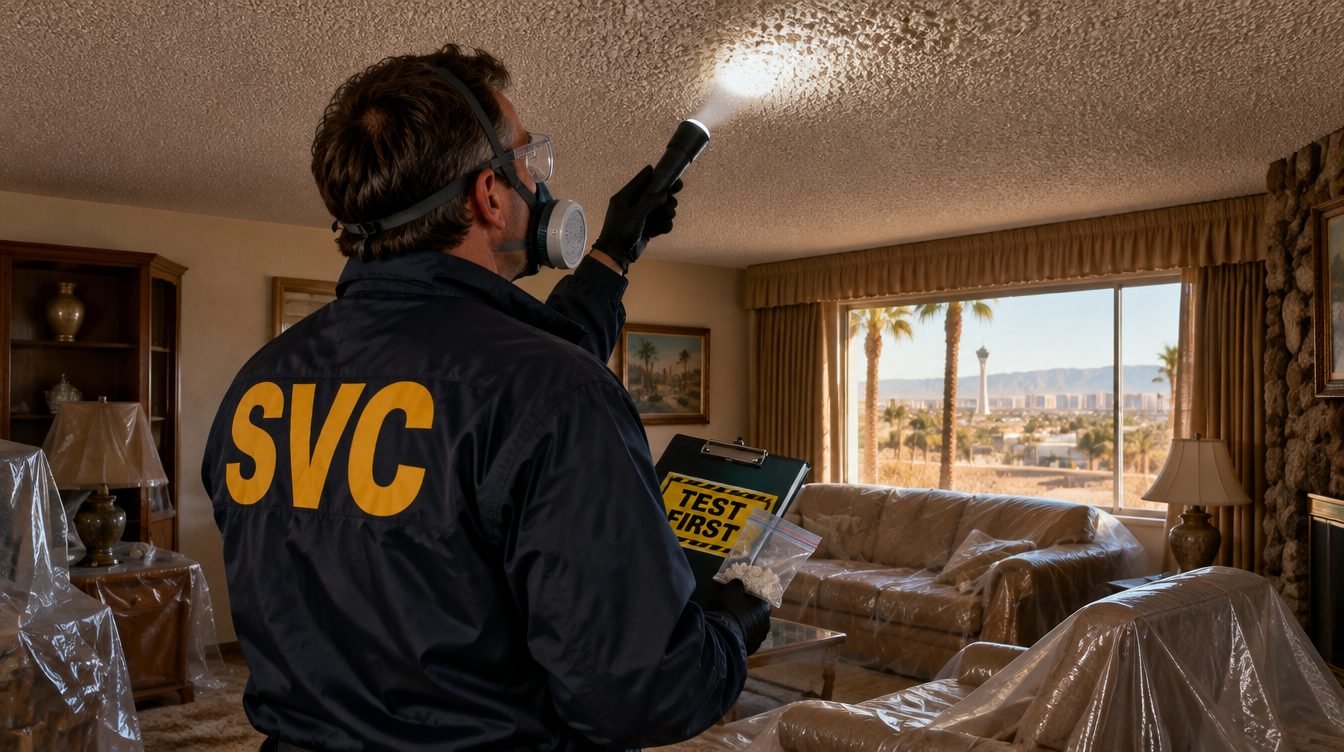
    Inspector checking a water-stained popcorn ceiling before an insurance claim and asbestos test

    Why Most Policies Don’t Pay for Asbestos Removal

    Homeowners insurance is built to pay for sudden, accidental damage — a fire, a storm, a pipe that bursts without warning. It is not built to pay for upgrades, normal wear and tear, or problems that were already in the house.

    Asbestos usually falls on the wrong side of that line for two reasons:

    • It was there all along. A popcorn ceiling sprayed in 1979 didn’t “happen” to your house. Removing it is treated like a remodeling or maintenance decision.
    • Pollution exclusions. Most policies have an exclusion for pollutants and contaminants, and insurers commonly apply it to asbestos.

    So if you simply want the popcorn gone — to update the look, sell the house, or get peace of mind — plan on paying for testing and removal yourself.

    When Insurance Might Help

    The exception is when something your policy covers causes the damage. If a covered event breaks open or soaks an asbestos ceiling, some insurers will pay to clean it up safely as part of repairing that damage — minus your deductible and up to your limits.

    Examples insurers and insurance sites commonly give include:

    • A pipe bursts and water pours through the ceiling.
    • A fire damages the room.
    • A storm or falling tree breaks through the roof and ceiling.
    • Vandalism damages walls or ceilings.

    Even then, it isn’t guaranteed. Some policies exclude asbestos cleanup even after a covered event. The wording of your policy decides it.

    Covered or Not? Common Popcorn Ceiling Situations

    SituationUsually covered?
    You want to remove an old popcorn ceiling to update your homeUsually not — remodeling cost
    A test finds asbestos before a planned remodelUsually not
    A pipe suddenly bursts and soaks the ceilingMaybe — if the water damage is covered, cleanup may be included
    Fire or smoke damages the ceilingMaybe — depends on your policy
    Storm or tree damage breaks through the ceilingMaybe — depends on your policy
    A slow leak over months, or the ceiling crumbles with ageUsually not — gradual damage and wear are often excluded
    You (or someone you hired) scraped it without testingUsually not under your policy — talk to your agent, and to the contractor about their insurance
    Health problems from asbestos exposureNot homeowners insurance — see your doctor; health insurance covers medical care

    If Water or Fire Damaged Your Popcorn Ceiling: What to Do

    If something sudden damaged a ceiling that might contain asbestos, these steps protect your family and your claim:

    1. Stop the source if you safely can — shut off the water or call for emergency help.
    2. Keep everyone out of the room. Close the door. Turn off fans and the A/C serving that area. Keep kids and pets away.
    3. Don’t scrape, sweep or vacuum the debris. That can spread fibers.
    4. Take photos and video of the damage before anything is moved.
    5. Call your insurance company promptly and open a claim. Tell them the ceiling may contain asbestos.
    6. Get the material tested by a professional. Your adjuster may want results before approving cleanup.
    7. Get a written estimate from a licensed asbestos abatement company, and keep every receipt.
    8. Don’t throw away damaged material until your insurer says it’s okay.

    If You’re Removing It on Purpose: Plan to Pay

    For a planned removal, insurance usually isn’t part of the picture — but a little planning keeps the cost under control:

    • Test first. A professional test runs about $250–$850 (national average). It tells you whether you need regular removal ($1–$2 per sq ft) or licensed abatement (about $4–$20 per sq ft).
    • Compare quotes that list testing, removal, finish, paint and cleanup separately. See our cost guide.
    • Ask about sealing or covering. If removal isn’t required, sealing or covering an asbestos ceiling can cost less. See asbestos removal cost options.
    • Do several rooms at once. Setup is a big part of the cost.

    Your Contractor’s Insurance Matters, Too

    Whoever works on your ceiling should carry their own insurance. If a crew damages your home, their insurance — not yours — should respond. Before any work starts:

    • Ask for a certificate of liability insurance, and check that it’s current.
    • For asbestos work, hire a properly licensed abatement company and ask what pollution coverage they carry.
    • Check the contractor’s license on the Nevada State Contractors Board website.

    That’s exactly what SVC checks before we send anyone to your home. See how we vet our pros.

    Landlords and Renters

    • Landlords: a landlord policy generally works like a homeowners policy — sudden damage may be covered, planned removal usually isn’t. Ask your agent before starting work in an occupied rental.
    • Renters: renters insurance covers your belongings, not the building. If the ceiling is damaged, tell your landlord in writing and don’t disturb it yourself.

    Selling a Home With a Popcorn Ceiling

    Buyers often ask about popcorn ceilings and asbestos. A recent test result gives you a clear answer and helps you plan repairs. Ask your real estate agent what you need to disclose — don’t guess.

    Questions to Ask Your Insurance Agent

    • Does my policy have a pollution or contaminants exclusion, and does it apply to asbestos?
    • If a burst pipe, fire or storm damages a ceiling that contains asbestos, is the cleanup covered?
    • Is there a separate limit for mold, pollutants or debris removal?
    • Do you need a lab test before you approve asbestos cleanup?
    • Will you pay for testing as part of a covered claim?
    • Do I need your approval before an abatement company starts work?
    • Does my policy cover the cost of staying somewhere else while the work is done?
    • What is my deductible for this kind of claim?

    Mistakes That Can Hurt a Claim

    • Cleaning up first. Sweeping or vacuuming debris can spread fibers and destroy evidence of the damage.
    • Waiting too long. Most policies require you to report damage promptly and take reasonable steps to prevent more damage.
    • Skipping photos. Take pictures and video before anything is moved or thrown out.
    • Hiring an unlicensed crew. Asbestos work done by the wrong company can create a bigger problem — and a bigger bill.
    • Assuming the answer. Some policies cover more than you’d expect, and some cover less. Ask, and get it in writing.

    How to Check Your Own Policy

    1. Find your policy’s declarations page and the exclusions section.
    2. Look for words like “pollutants,” “contaminants,” “asbestos,” and “wear and tear.”
    3. Call your agent and ask: “If a covered event damages a ceiling that contains asbestos, is the cleanup covered?”
    4. Ask for the answer in writing before you need it.

    If you have a dispute with your insurer, the Nevada Division of Insurance offers consumer help.

    Insurance and Your Home’s Build Year

    Find your home’s year on the Clark County Assessor website (Nye County for Pahrump), then use this quick guide. Check your year →

    Home builtWhat it means for you
    Before 1980If a covered event damaged the ceiling, tell your insurer it may contain asbestos. Expect the adjuster to want a lab test before cleanup.
    1980–1986Same as above — asbestos is still possible. Test before any cleanup or repairs.
    1987–1999Asbestos is less likely. A quick test can still speed up a claim if the adjuster asks.
    2000 or newerAsbestos is very unlikely. Focus your claim on the water or fire damage itself.

    TEST FIRST · 60-SECOND CHECK

    Could your ceiling have asbestos?

    Answer 6 quick questions about your home and get clear next steps — including what to do if it’s already been scraped. Private: your answers never leave your device.

    Insurance & Asbestos Questions

    Does homeowners insurance cover asbestos removal?

    Usually not by itself. Most policies exclude pollutants like asbestos. The main exception is when a covered event — such as a sudden burst pipe, fire or storm — damages the ceiling and disturbs the asbestos. Then the cleanup may be part of that claim. Check your policy and ask your agent.

    Will insurance pay to remove my popcorn ceiling because it might have asbestos?

    Generally no. Removing a popcorn ceiling to update your home, or because you’re worried about asbestos, is usually treated as a remodeling or maintenance cost, not an insurance claim.

    A pipe burst and soaked my popcorn ceiling. Is that covered?

    It may be. Sudden, accidental water damage is often covered, and some insurers include asbestos cleanup when a covered event disturbed it. Don’t touch the wet ceiling, document the damage, call your insurer, and get the material tested.

    Does homeowners insurance cover health problems from asbestos?

    Homeowners insurance covers your property and your liability to others, not your own medical care. For health concerns, talk to your doctor. Your health insurance covers medical care.

    Should I tell my insurance company my ceiling has asbestos?

    Read your policy and talk to your agent. Many homes built before the 1980s have asbestos somewhere, and an undisturbed ceiling in good shape is generally lower risk. Your agent can tell you what your policy requires you to report.

    I rent my home. Who pays?

    Renters insurance covers your belongings, not the building. The ceiling is your landlord’s responsibility. Tell your landlord in writing about any damage, and don’t disturb the ceiling yourself.

    Keep Reading

    Sources

    Not sure what’s in your ceiling?

    Start with a test. It answers the insurance question, the cost question and the safety question at the same time.

    About SVC: Smooth Vegas Ceilings connects Las Vegas homeowners with licensed, insured contractors and properly licensed asbestos testing and abatement companies. SVC is not an insurance company or agent and does not give insurance, legal or medical advice.
  • Who’s Responsible for Asbestos in My Home — the Builder, Seller or Realtor?

    Who’s Responsible for Asbestos in My Home — the Builder, Seller or Realtor?

    Short answer: in most cases, no one did anything illegal. Asbestos popcorn ceilings were legal and standard when most older homes were built. Builders are usually protected by time limits, sellers only have to disclose what they knew, and realtors generally don’t have to test. The exception is when someone knew about asbestos and hid it — then a Nevada attorney can tell you your options.

    Finding out your ceiling may contain asbestos is frustrating. It’s natural to look for someone to hold responsible. Here’s how responsibility actually works in Nevada — in plain English — so you can spend your energy on the right next step.

    Not legal advice. This article explains general rules. Laws change and every situation is different. For advice about your case, talk to a Nevada real estate attorney. For health concerns, talk to your doctor.

    At a Glance: Who’s Usually Responsible?

    WhoUsually responsible?Why
    Home builderRarelyIt was legal at the time, and Nevada’s construction defect time limit is generally 10 years.
    Product manufacturerSometimes, for illnessClaims are usually tied to an asbestos-related disease, not just its presence in a ceiling.
    SellerOnly if they knewSellers disclose known conditions; they don’t have to test.
    Real estate agentOnly if they knewAgents disclose known material facts; they don’t have to investigate.
    Home inspectorRarelyStandard inspections usually don’t include asbestos testing.
    You, the current ownerFor what happens nextManaging it safely — and disclosing it when you sell.

    The Builder

    Most homeowners’ first instinct is to blame whoever built the house. But for homes built before the asbestos bans took effect, the builder was usually following normal, legal practice. Spray-on ceiling texture was a product they bought from a manufacturer and applied like everyone else did. Read why your home has asbestos for the full history.

    There’s also a time limit. Nevada’s statute of repose for construction defect claims (NRS 11.202) is generally 10 years from substantial completion of the home. For a house built in the 1970s or early 1980s, that window closed decades ago.

    Bottom line: a claim against the original builder for an asbestos ceiling in an older home is usually a dead end. A Nevada attorney can confirm whether anything unusual about your situation changes that.

    The Product Manufacturer

    Historically, most asbestos lawsuits have targeted the companies that made asbestos products, not homebuilders. Those cases are usually about people who developed an asbestos-related illness. Many of those manufacturers went bankrupt and set up trust funds to pay injury claims.

    Simply having asbestos in your ceiling generally isn’t a claim by itself. Legal claims in this area are usually connected to a medical diagnosis. If you have health concerns, start with your doctor.

    The Seller

    Nevada requires most home sellers to complete a Seller’s Real Property Disclosure Form (NRS Chapter 113). The form asks whether the seller is aware of environmental hazards — and it lists asbestos as an example.

    Here’s the key: the form covers conditions the seller knows about. Nevada law says a seller doesn’t have to disclose a defect they’re not aware of, and sellers aren’t required to test for asbestos.

    • Seller never tested, didn’t know: generally not the seller’s fault.
    • Seller had a test showing asbestos and checked “no”: that may be a disclosure problem. Talk to an attorney.
    • Seller disclosed it and you didn’t notice: check your closing documents — it may be in your paperwork.

    The Real Estate Agent

    Nevada real estate licensees must disclose material facts about a property that they know about. They generally aren’t required to inspect, test, or independently verify what the seller says.

    So unless your agent actually knew about asbestos and kept quiet, they usually aren’t responsible. A good agent will often recommend testing for older homes — it’s a smart question to ask before you buy.

    The Home Inspector

    A standard home inspection is a visual check. It usually doesn’t include lab testing for asbestos, mold or other environmental hazards. Some inspectors note materials that may contain asbestos and recommend testing.

    Pull out your inspection report. If it recommended testing, that’s useful information — and a reminder that testing is the step that answers the question.

    If You Think Someone Hid It

    1. Gather your documents: purchase contract, Seller’s Real Property Disclosure Form, inspection report, and any emails or texts.
    2. Get the ceiling tested so you know what you’re dealing with. Keep the lab report.
    3. Don’t disturb the ceiling while you sort it out.
    4. Write down what you know: who said what, and when.
    5. Talk to a Nevada real estate attorney promptly. Legal deadlines apply, and they may be shorter than you think.

    Where to Put Your Energy Instead

    For most homeowners, the honest answer is that nobody’s to blame — it was the building practice of the time. Chasing blame can cost months and legal fees with little to show for it. The good news is that the fix is straightforward:

    1. Test first — about $250–$850 for a professional test (national average).
    2. Choose your option — regular removal if clear; licensed abatement, sealing or covering if asbestos is found.
    3. Check your insurance if a burst pipe, fire or storm damaged the ceiling. See does homeowners insurance cover asbestos removal?
    4. Keep every record — test results, invoices and clearance reports.

    Buying an Older Home? Protect Yourself Up Front

    If you’re shopping for a home built before the mid-1980s, a few simple steps during escrow can save you a surprise later:

    • Read the seller disclosure form closely, especially the environmental hazards question.
    • Ask the seller directly whether the ceilings have ever been tested, and ask for any reports.
    • Order an asbestos test during your inspection period if you plan to remodel. It’s a small cost compared to the price of the home.
    • Ask your agent about adding a testing contingency to your offer, so the result can shape your decision or your negotiation.
    • Get repair estimates before closing if the test comes back positive, so you know the real cost of the house.

    A popcorn ceiling isn’t a reason to walk away from a good home. Knowing what’s in it — before you sign — just puts you in control.

    When It’s Your Turn to Sell

    Once you know your ceiling contains asbestos, it becomes a known condition — and you should expect to disclose it on the Nevada seller disclosure form. That’s another reason to keep good records. A buyer who sees a lab report, a licensed abatement invoice and a clearance result usually has far fewer worries than one who sees a question mark. Ask your agent how to handle disclosure for your home.

    Responsibility by Build Year

    Find your home’s year on the Clark County Assessor website (Nye County for Pahrump), then use this quick guide. Check your year →

    Home builtWhat it means for you
    Before 1980Asbestos texture was legal and common. Builder claims are long past Nevada’s time limits.
    1980–1986Builders could legally use up existing supplies. Same story — focus on testing and disclosure.
    1987–1999Asbestos is less likely. If you suspect it, test before blaming anyone.
    2000 or newerAsbestos is very unlikely. For other defects in a newer home, Nevada’s 10-year time limit may still matter — ask an attorney.

    TEST FIRST · 60-SECOND CHECK

    Could your ceiling have asbestos?

    Answer 6 quick questions about your home and get clear next steps — including what to do if it’s already been scraped. Private: your answers never leave your device.

    Responsibility & Disclosure Questions

    Can I sue my builder for asbestos in my popcorn ceiling?

    Usually it’s very difficult. For older homes, asbestos texture was generally legal and standard when it was installed, and Nevada’s construction defect statute of repose is generally 10 years from completion. A Nevada attorney can tell you whether any exception applies to your situation.

    Did the seller have to tell me about asbestos?

    Nevada’s Seller’s Real Property Disclosure Form asks about environmental hazards, including asbestos. But sellers disclose what they know — they don’t have to test, and they aren’t required to disclose defects they weren’t aware of.

    Is my realtor responsible for not telling me?

    Nevada real estate licensees must disclose material facts they know about, but they generally aren’t required to investigate or test the property. If the agent didn’t know, they usually aren’t responsible.

    Should my home inspector have found it?

    Standard home inspections usually don’t include asbestos lab testing. Inspectors may note materials that could contain asbestos and recommend testing. Check your inspection report and the inspector’s agreement.

    What if the seller knew and hid it?

    If you have evidence a seller knew about asbestos — for example, a test report — and didn’t disclose it, you may have legal options. Deadlines apply, so talk to a Nevada real estate attorney soon.

    Do I have to tell buyers when I sell?

    If you know your ceiling contains asbestos, expect to disclose it on Nevada’s seller disclosure form. Removal or abatement records help show buyers how it was handled. Ask your agent.

    Keep Reading

    Sources

    Get answers, not blame

    A test tells you exactly what you’re dealing with. We’ll set it up and connect you with a licensed local pro.

    About SVC: Smooth Vegas Ceilings connects Las Vegas homeowners with licensed, insured contractors and properly licensed asbestos testing and abatement companies. SVC is not a law firm and does not give legal, insurance or medical advice. SVC does not perform asbestos abatement.

  • Why Does My Home Have Asbestos? The Story Behind Popcorn Ceilings

    Why Does My Home Have Asbestos? The Story Behind Popcorn Ceilings

    Short answer: your home probably has asbestos in its popcorn ceiling because, when it was built, that was normal. For decades, asbestos was a cheap, fireproof ingredient in spray-on ceiling texture. It was legal, widely used, and nobody was hiding anything. Federal bans on spray-applied asbestos came in the 1970s — but builders could use up existing supplies, which is why homes built into the mid-1980s can still have it.

    If you just found out your ceiling might contain asbestos, it’s natural to feel blindsided — and to wonder who’s to blame. This guide explains how it got there. Our companion article covers who’s responsible today: the builder, seller or realtor.

    TEST FIRST. You can’t tell by looking. If your home was built before the mid-1980s, don’t scrape, sand or drill the ceiling until a sample is tested. Take the 60-second exposure check →

    Quick Facts

    • Most at risk: homes built before about 1986.
    • Main ban: spray-applied asbestos surfacing, 1978 — but existing supplies could still be used.
    • Lower risk: popcorn ceilings from the 1990s and later.
    • Only real answer: an accredited lab test, typically about $250–$850.
    • Biggest danger: scraping, sanding or drilling before testing.
    • Who was at fault? Usually no one — it was legal, standard practice at the time.

    Why Popcorn Ceilings Were Everywhere

    Popcorn ceilings — also called acoustic, stucco or cottage-cheese ceilings — were popular in American homes for decades, roughly from the 1950s into the 1980s. Builders loved them for practical reasons:

    • Fast and cheap. Spraying texture on a ceiling took far less time than taping and sanding drywall to a smooth finish.
    • Hides flaws. The bumpy texture covered seams, uneven drywall and small mistakes.
    • Quieter rooms. The rough surface helped soften echo and sound — that’s why it’s also called an acoustic ceiling.
    • It was the style. Homebuyers expected it. A textured ceiling looked finished and modern for its time.

    Why Asbestos Was in the Mix

    Asbestos is a natural mineral made of tiny fibers. For most of the 20th century, it was considered a miracle material. Manufacturers added it to hundreds of building products because it:

    • Resists heat and fire
    • Adds strength and binds materials together
    • Was inexpensive and easy to get

    Some spray-on ceiling texture products contained asbestos. The homebuilder usually didn’t mix the material — they bought a product from a manufacturer and sprayed it on, the same way every other builder did.

    When It Stopped: A Simple Timeline

    YearWhat happened
    1973EPA bans spray-applied asbestos used for fireproofing and insulation.
    1977Consumer Product Safety Commission bans asbestos in wall patching compounds and artificial fireplace embers.
    1978EPA bans spray-applied asbestos surfacing materials for the remaining uses — including decorative spray-on products.
    Late 1970s–mid 1980sBuilders could still install existing stock, so asbestos texture shows up in homes built during these years.
    1989EPA issues a broad asbestos ban.
    1991A federal court overturns most of the 1989 ban. Some bans stay in place.
    2024EPA finalizes a ban on chrysotile asbestos, the last type still used in the U.S.

    What this means for you: if your home was built before about 1986, test the ceiling before any work. Homes built later are much less likely to have asbestos texture, though popcorn ceilings kept being sprayed into the 1990s without it.

    Why Las Vegas Has Both Kinds of Homes

    Las Vegas grew in waves. The older neighborhoods near downtown, Huntridge, Charleston Heights and parts of North Las Vegas and Henderson include many homes from the asbestos era. Boulder City has a large share of older homes too.

    Much of the valley — Summerlin, much of Henderson, and the newer northwest and southwest — was built later, after asbestos texture had been phased out. But plenty of those homes still have popcorn ceilings, just without the asbestos. That’s why the build year is your first clue and a lab test is the only real answer.

    How to Find Your Home’s Build Year

    1. Look up your address on the Clark County Assessor website (Nye County Assessor for Pahrump).
    2. Check your purchase or closing documents.
    3. Ask your realtor, or check the listing history.
    4. Remember: additions and remodels may be newer or older than the original house.

    Where Else Asbestos Can Hide in Older Homes

    Popcorn ceilings get the attention, but older homes can have asbestos in other materials too, such as:

    • Drywall joint compound and some textured paints
    • Old vinyl floor tiles and the adhesive under them
    • Pipe, duct and furnace insulation
    • Some roofing and siding materials

    If you’re planning a bigger remodel, ask your tester about checking other materials you’ll be cutting or removing.

    Why Nobody Told You When You Bought the House

    Many homeowners only learn about asbestos when they’re about to remodel. That’s usually not because someone hid it. In Nevada, sellers disclose the conditions they know about — they aren’t required to test. A standard home inspection usually doesn’t include asbestos lab testing either. So if nobody ever tested the ceiling, nobody actually knew.

    If you believe someone did know and kept it from you, that’s a different situation. Our article on who’s responsible for asbestos in your home explains how disclosure works and when to talk to an attorney.

    Common Myths About Asbestos Popcorn Ceilings

    • Myth: “Every popcorn ceiling has asbestos.” Not true. Many popcorn ceilings — especially from the 1990s on — don’t. Only a test tells you.
    • Myth: “If it has asbestos, I have to remove it right away.” Not necessarily. An intact, undisturbed ceiling is generally lower risk. Sealing or covering can be options.
    • Myth: “Painting over it makes it safe forever.” Paint can help seal it, but scraping or drilling a painted ceiling still disturbs what’s underneath — and paint makes removal harder later.
    • Myth: “A little scraping won’t matter.” Small jobs can still release fibers. Test before you touch it, no matter how small the project.
    • Myth: “I can tell by the color or texture.” Asbestos fibers are microscopic. White, gray, sparkly or plain — looks don’t tell you anything.

    Is It Dangerous Right Now?

    An asbestos popcorn ceiling in good shape that nobody touches is generally lower risk. The concern is when it’s disturbed — scraped, sanded, drilled, water-damaged or crumbling — and fibers get into the air.

    If you’re worried about your health, talk to your doctor and mention the possible exposure. Only a doctor can evaluate your health.

    What to Do Next

    1. Check your build year. Before about 1986? Treat it as suspect.
    2. Don’t disturb the ceiling — no scraping, sanding, drilling or hanging things from it.
    3. Get it tested by a professional. A test typically costs about $250–$850 (national average).
    4. Choose your option: clear result means regular removal; asbestos found means licensed abatement, sealing or covering.
    5. Keep the paperwork. Test results and removal records help when you sell.

    What Your Build Year Means

    Find your home’s year on the Clark County Assessor website (Nye County for Pahrump), then use this quick guide. Check your year →

    Home builtWhat it means for you
    Before 1980Most likely era for asbestos popcorn ceilings. Test before any work.
    1980–1986Possible — leftover supplies could still be installed after the 1978 ban. Test first.
    1987–1999Less likely. Popcorn was still popular, but asbestos texture had been phased out. Test if unsure.
    2000 or newerVery unlikely. Removal is usually a standard job.

    TEST FIRST · 60-SECOND CHECK

    Could your ceiling have asbestos?

    Answer 6 quick questions about your home and get clear next steps — including what to do if it’s already been scraped. Private: your answers never leave your device.

    Questions About Asbestos in Older Homes

    What years did popcorn ceilings have asbestos?

    Asbestos was commonly used in spray-on ceiling texture for decades before the late 1970s. Spray-applied asbestos surfacing was banned in 1978, but existing supplies could still be used, so homes built into the mid-1980s can have it. Popcorn ceilings from the 1990s and later are much less likely to contain asbestos.

    Why did builders use asbestos in popcorn ceilings?

    Asbestos was cheap, fire-resistant and added strength to the spray texture. Popcorn texture itself was popular because it was fast to apply, hid drywall imperfections, and helped dampen sound. At the time, it was legal and standard practice.

    Was it illegal for my builder to use asbestos?

    For homes built before the federal bans took effect, using asbestos-containing texture was generally legal and common. That’s why most homes with asbestos popcorn ceilings weren’t built that way by mistake.

    My house was built in 1990. Can it still have asbestos?

    It’s much less likely, but not impossible — remodels, additions and other materials can vary. If you’re unsure, a lab test is the only way to know.

    Is asbestos still legal in the U.S. today?

    Most uses have been restricted for decades. In 2024, the EPA finalized a ban on chrysotile asbestos, the only type still being imported and used in the U.S.

    Can I tell if my ceiling has asbestos by looking at it?

    No. Asbestos fibers are microscopic. Only a sample tested by an accredited lab can confirm it.

    Keep Reading

    Sources

    Find out what’s in your ceiling

    A quick test answers the question for good. We’ll set it up and connect you with a licensed local pro.

    About SVC: Smooth Vegas Ceilings connects Las Vegas homeowners with licensed, insured contractors and properly licensed asbestos testing and abatement companies. SVC does not perform asbestos abatement and does not give legal or medical advice.
