EMERGENCY · READ THIS FIRST
Ceiling Leak or Collapse? What to Do in the Next Hour — and Who to Call
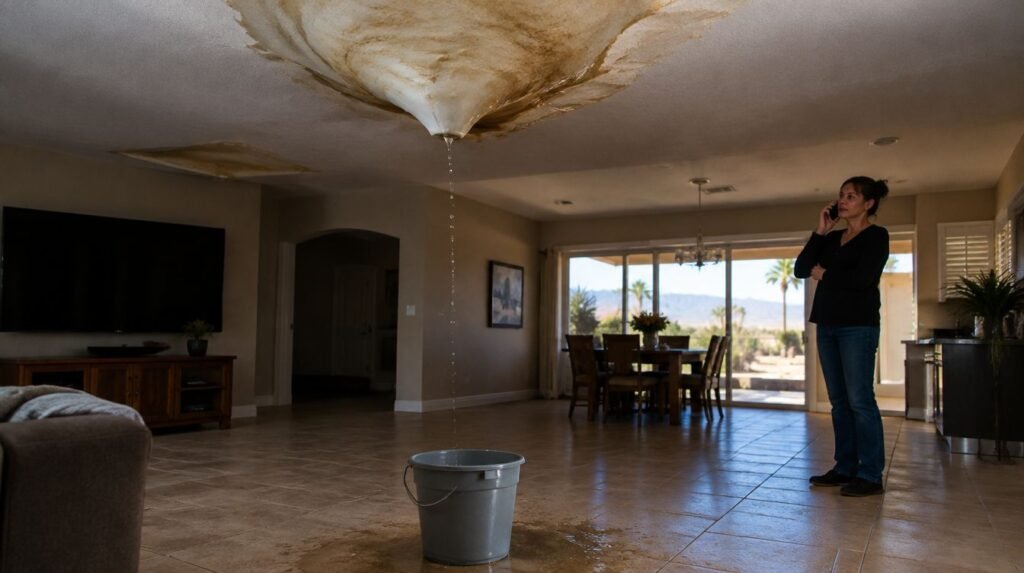
If your ceiling is dripping, bulging or already came down, stay calm and work through these steps. Safety first, then stop the water, then protect your claim. If anyone is hurt or you smell gas or see sparking, get out and call 911.
Clear steps · Fast testing · Licensed repair
The Next Hour: Step by Step
- Get everyone out from under it. A sagging, wet ceiling can drop without warning. Keep kids and pets away.
- Turn off electricity to the area at the breaker — water and light fixtures don’t mix. Don’t touch switches if you’re standing in water.
- Stop the water. Main shut-off valve (often near the street or in the garage), the water heater valve, or the A/C if the condensate line is the source.
- Relieve a water bubble only if it’s safe. A bulging ceiling full of water can sometimes be drained with a small hole and a bucket underneath. If it’s big, sagging badly, or popcorn in an older home, don’t — wait for a pro.
- Don’t clean up debris yet. Fallen popcorn or drywall in an older home may contain asbestos. Mist it lightly with water, close the door, and turn off fans and A/C in that area.
- Document everything. Photos and video of the ceiling, the source and damaged items.
- Call your insurance company to start a claim.
Then: Who to Call
- Plumber, roofer or HVAC tech — to stop the source.
- Water mitigation company — for drying out larger leaks.
- Asbestos testing — for fallen or wet texture in homes built before the mid-1980s. Book a test.
- Licensed ceiling and drywall repair — once dry and tested. That’s where we come in.
TEST FIRST. Popcorn, stucco and cottage-cheese ceilings in homes built before the mid-1980s may contain asbestos. You can’t tell by looking. Don’t scrape, sand or drill until a sample is tested. Learn about asbestos testing →
When was your home built?
Not sure? Check your year in 10 seconds →
What Causes Ceilings to Come Down
Most ceiling collapses in homes come from water: a slow leak that soaks the drywall until it can’t hold its own weight, or a sudden flood from a broken supply line, water heater or clogged A/C drain in the attic. Old fasteners and heavy fixtures can play a part too. Catching stains and sagging early is the best prevention — see ceiling water damage repair.
Ceiling Emergency Questions
Is it safe to stay in my house?
Usually, if the area is closed off, the power to it is off and the water is stopped. If a large area fell or you’re not sure about the structure, stay elsewhere until a pro checks it.
Should I clean up the fallen ceiling?
Not if your home was built before the mid-1980s and the ceiling had popcorn or texture — get it tested first. Mist debris with water and close the room.
Will insurance cover a collapsed ceiling?
Often, if it was caused by a sudden, covered event. Slow leaks and neglect are usually excluded. Call your insurer and keep records.
Ceiling down? We’ll help you get it fixed.
Once the water is stopped, call us. We’ll set up asbestos testing if needed and send a licensed pro to repair it.
About SVC: Smooth Vegas Ceilings is a Las Vegas service that connects homeowners with licensed, insured contractors and properly licensed asbestos testing and abatement companies. We check every pro’s Nevada license and insurance, and we compare pricing across our partners to keep your quote competitive. We come to you: SVC serves homes across the valley and has no walk-in office. SVC does not perform asbestos abatement. How we vet our pros